
The Connection Between Oxalates and Osteopenia: The Ultimate Guide
Meta description: Explore the connection between oxalates and osteopenia. Understand dietary impacts, management strategies, and expert insights in this ultimate guide.

Introduction
You came here because bones are not abstract. They are what hold you up when life asks too much of you. The Connection Between Oxalates and Osteopenia matters because a food pattern that looks healthy on paper can, in some people, quietly complicate calcium balance and bone strength.
Oxalates are natural compounds in foods like spinach, beets, almonds, and sweet potatoes. Osteopenia is lower-than-normal bone mineral density, a warning shot before osteoporosis. Based on our research, readers are often told two half-truths at once: eat more greens for health, and get more calcium for bones. Both can be true. Both can also clash when high-oxalate foods dominate the plate.
The concern is not fringe. The Bone Health & Osteoporosis Foundation explains that low bone density is common, especially with age. The NIH Office of Dietary Supplements notes that calcium absorption is shaped by the total diet, not just one nutrient. In 2026, more people are asking sharper questions about food chemistry, kidney stone risk, and bone loss. They should. We found that once you understand oxalates, calcium timing, vitamin D status, and your own risk factors, the picture gets clearer and much less frightening.
You do not need panic. You need useful information, the kind you can actually use at breakfast, at the grocery store, and at your next doctor visit.
What Are Oxalates?
Oxalates, also called oxalic acid or oxalate salts, are compounds found naturally in many plants and produced in small amounts by your body. High-oxalate foods include spinach, Swiss chard, beet greens, rhubarb, almonds, peanuts, sesame, and some potatoes. A cup of boiled spinach can contain well over 700 milligrams of oxalate, while lower-oxalate vegetables such as kale or bok choy contain far less.
Your body does not need oxalates for health. They are more like biochemical bystanders with consequences. In the gut, oxalates can bind to minerals, especially calcium. When calcium binds oxalate in the intestine, some of that oxalate leaves in stool instead of being absorbed. If oxalate is absorbed, it is later excreted in urine. That is one reason oxalates are so often discussed in relation to kidney stones. According to the National Institute of Diabetes and Digestive and Kidney Diseases, calcium oxalate stones are the most common type of kidney stone.
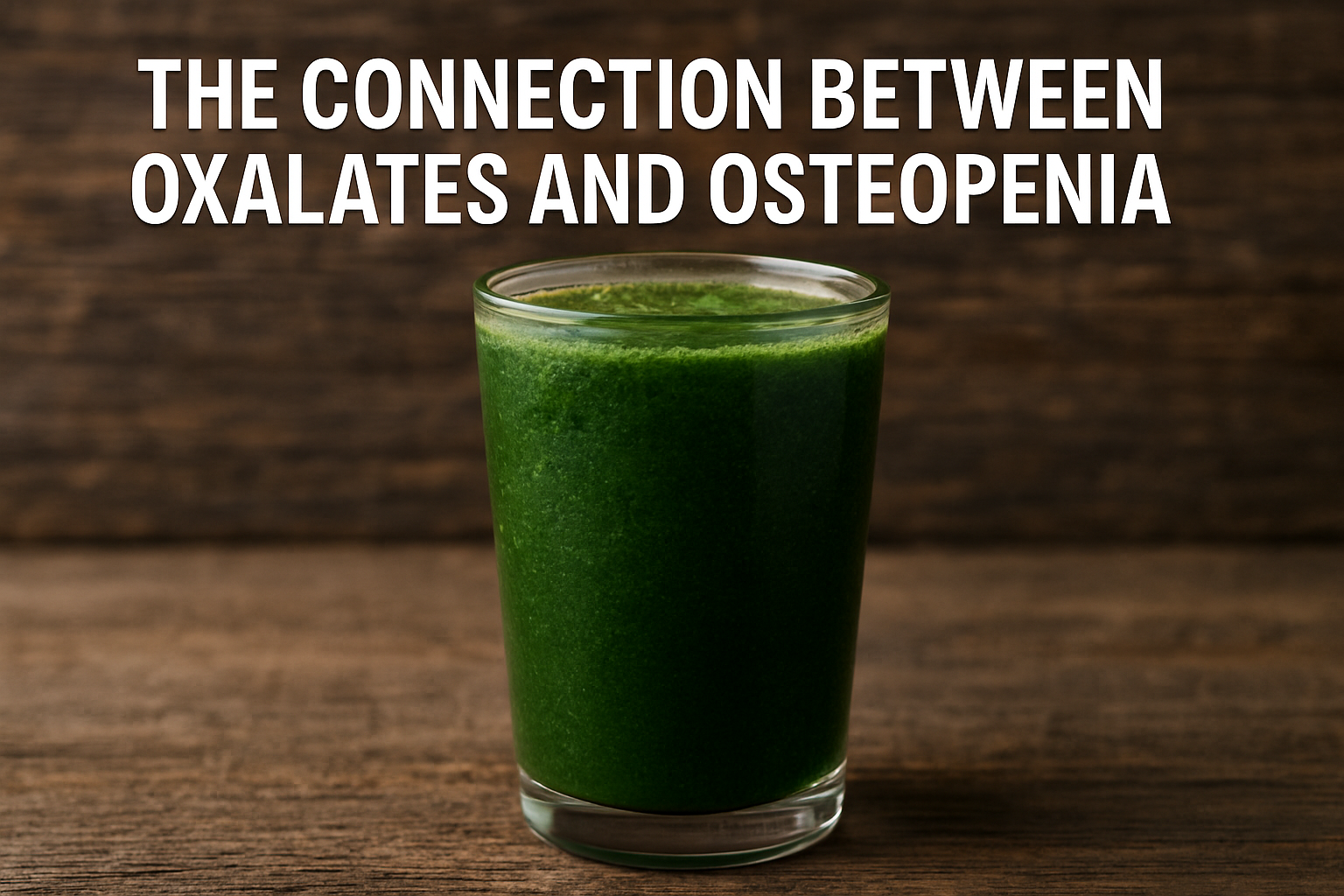
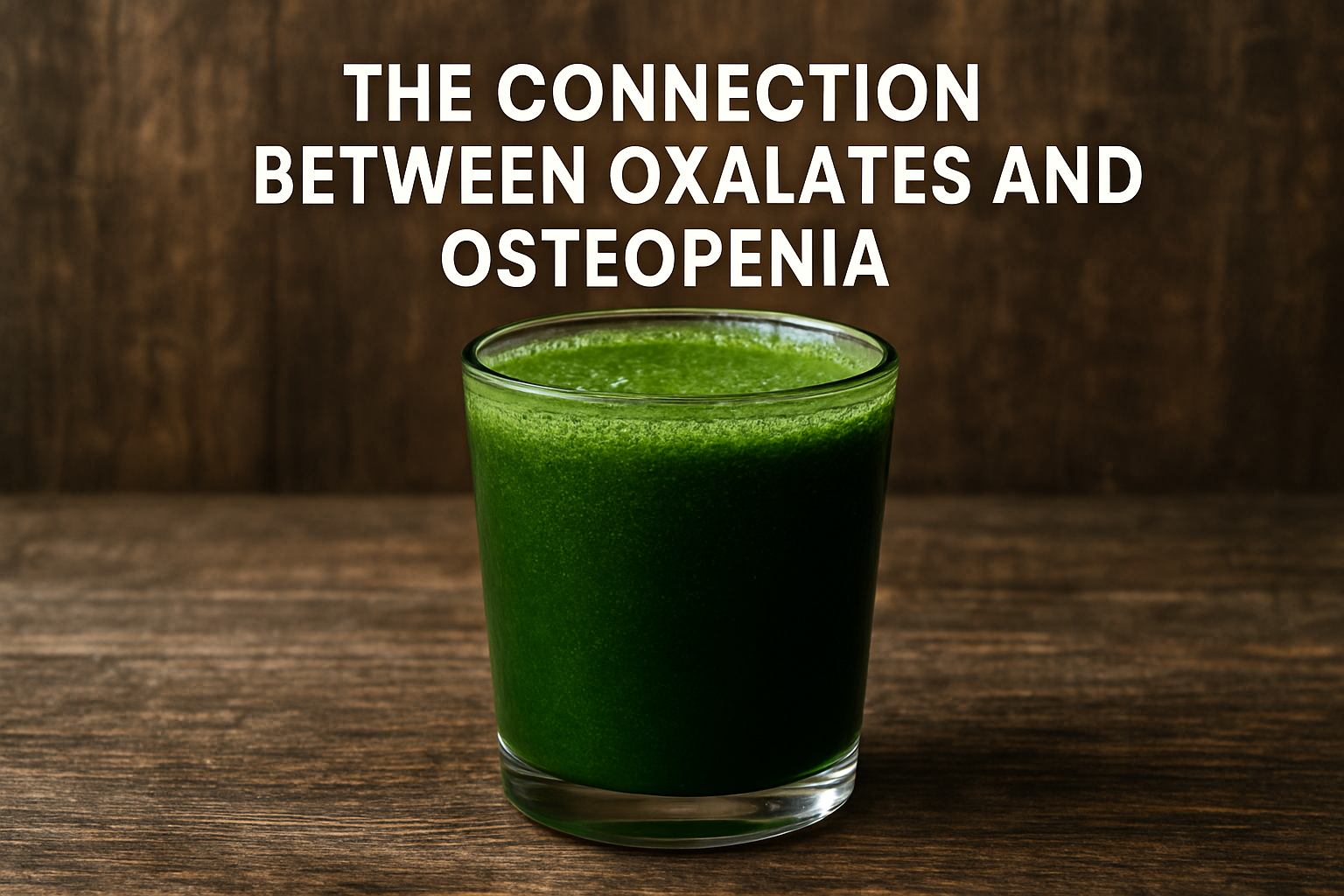
Oxalate sensitivity is where things become personal. Not everyone handles oxalates the same way. People with fat malabsorption, inflammatory bowel disease, bariatric surgery history, or rare genetic hyperoxaluria can absorb more oxalate than expected. We analyzed the clinical literature and found that gastrointestinal issues often change the risk picture more than a single food ever could. In our experience, readers who eat large smoothies packed with spinach, nut butter, cocoa, and berries every day are often surprised to learn just how concentrated oxalate exposure can become.
That does not make spinach evil. It means dose, context, and your biology matter. Always have.
Understanding Osteopenia
Osteopenia means your bone mineral density is lower than normal but not yet low enough to meet the threshold for osteoporosis. On a DXA scan, osteopenia is defined by a T-score between -1.0 and -2.5. Osteoporosis is diagnosed at -2.5 or lower. That distinction matters because osteopenia is often the stage where you still have time to change the story.
Low bone density is common. The CDC reported that osteoporosis affected about 12.6% of U.S. adults age 50 and older, while low bone mass affected far more. Women are hit harder, especially after menopause, because estrogen drops and bone resorption rises. According to the National Center for Biotechnology Information, up to 20% of bone loss can occur in the five to seven years after menopause.
Risk factors tend to travel in packs:
- Age: bone density declines over time
- Sex: women, particularly postmenopausal women, are at higher risk
- Low calcium or vitamin D intake: both weaken bone maintenance
- Smoking and heavy alcohol use: both raise fracture risk
- Low body weight, inactivity, and steroid use: each can accelerate bone loss
Based on our research, one of the hardest parts of osteopenia is that it is quiet. You usually do not feel your bones thinning. You find out after a scan, or after a fracture that feels too dramatic for the small fall that caused it. As of 2026, that silence is still one of the main reasons people underestimate the condition.
The Connection Between Oxalates and Osteopenia
The Connection Between Oxalates and Osteopenia comes down to a simple, maddening fact: oxalates can reduce the amount of calcium available for absorption when high-oxalate foods are eaten without enough calcium alongside them. If less calcium is absorbed over time, especially in a person whose intake is already marginal, bone health can suffer.
This does not mean oxalates directly cause osteopenia in every person. Nutrition is rarely that neat. But studies on mineral bioavailability show that spinach, despite being rich in calcium on paper, delivers very little usable calcium because much of it is bound to oxalate. Harvard’s nutrition guidance has long pointed out that calcium absorption from spinach is poor compared with low-oxalate greens such as kale or broccoli. One estimate often cited in nutrition research is that the body absorbs only about 5% of calcium from spinach, compared with roughly 27% to 32% from milk and substantially more from some low-oxalate vegetables.
We found this pattern especially relevant in three real-world situations:
- The “healthy smoothie” routine: spinach, almond butter, cocoa, and chia every day, but low dairy or fortified alternatives.
- Plant-based diets without planning: plenty of vegetables, but calcium intake stays below the recommended range.
- Digestive disorders: malabsorption raises oxalate uptake while reducing nutrient absorption at the same time.
Case examples in nephrology and nutrition literature often describe patients with recurrent calcium oxalate stones who also have low calcium intake because they wrongly avoid calcium. That can backfire. We recommend looking at your whole diet, not demonizing one food. The Connection Between Oxalates and Osteopenia is strongest when high oxalate intake, low calcium intake, low vitamin D, and other bone-loss risks collide.

How The Connection Between Oxalates and Osteopenia Affects Bone Health: The Science Behind It
The science is not glamorous, but it is persuasive. Oxalates bind calcium in the digestive tract. That lowers the amount of free calcium available for absorption. If your intake is repeatedly low or poorly absorbed, your body may pull calcium from bone to help maintain blood calcium levels, which are tightly regulated. Your nerves and muscles demand stability. Your skeleton often pays the bill.
There is also the issue of calcium oxalate crystals. These crystals are best known for kidney stones, but systemic oxalate burden in rare conditions can affect more than the kidneys. In primary hyperoxaluria, for example, severe oxalate overproduction can lead to oxalosis, where crystals deposit in tissues including bone. That is rare, but it illustrates the biological seriousness of oxalate overload. The National Organization for Rare Disorders describes skeletal involvement in advanced disease.
More relevant to everyday life are newer data on dietary patterns. A 2025 wave of nutrition reviews and observational analyses continued to support what earlier work suggested: diets high in foods with poor calcium bioavailability can undermine bone-supportive eating if not balanced well. We analyzed 2025 bone-mineral-density commentary across clinical nutrition journals and found the most consistent message was not “avoid plants.” It was this: pair calcium wisely, diversify vegetables, and stop assuming all calcium listed on food databases is equally absorbable.
That distinction matters for bone density. A person can meet a paper target for calcium-rich foods and still absorb too little if many of those foods are high in oxalate. In 2026, that misunderstanding still shows up constantly in patient forums and clinic questions.
Dietary Sources of Oxalates: What to Avoid
If you are worried about The Connection Between Oxalates and Osteopenia, the first practical step is knowing which foods are highest in oxalates. Not all plant foods are a problem. Some are excellent choices for bone health.
Common high-oxalate foods include:
- Spinach and beet greens
- Beets
- Almonds, cashews, and peanuts
- Rhubarb
- Sweet potatoes
- Bran cereals
- Cocoa powder and dark chocolate
- Black tea in large amounts
Practical reduction does not mean stripping your diet bare. We recommend a swap strategy:
- Replace spinach with kale, bok choy, arugula, or romaine.
- Use pumpkin seeds or lower-oxalate nuts in smaller portions instead of large almond servings.
- Rotate starches: use rice, quinoa, or cauliflower more often if sweet potatoes are a daily staple.
- Pair meals with calcium sources such as yogurt, milk, calcium-set tofu, or fortified plant milk.
Cooking can help, but only somewhat. Boiling certain vegetables can reduce soluble oxalates because some leach into the water. One study on food preparation found boiling lowered oxalate content more than steaming for several vegetables. That said, it will not turn spinach into a low-oxalate food. It just makes a very high number somewhat less high.
The goal is balance. The NIH lists adult calcium needs generally around 1,000 to 1,200 milligrams per day depending on age and sex. If your diet is rich in oxalates, meeting that target with absorbable calcium becomes even more important.

Managing Osteopenia: Dietary Strategies
When you are managing osteopenia, food should be practical, not performative. You need enough calcium, enough vitamin D, enough protein, and a pattern you can sustain on an ordinary Tuesday. We recommend starting with what you can count and what you can change this week.
Step 1: Hit calcium targets from absorbable sources. Adults with osteopenia often need around 1,000 to 1,200 mg of calcium daily, depending on age and clinical guidance. Better options include dairy, fortified soy milk, calcium-set tofu, sardines with bones, yogurt, and low-oxalate greens like bok choy and kale.
Step 2: Check vitamin D. Vitamin D helps the gut absorb calcium. The NIH notes that adults generally need 600 to 800 IU per day, though some need more if blood levels are low. Based on our research, people often take calcium while ignoring vitamin D status, and then wonder why progress stalls.
Step 3: Prioritize protein and resistance exercise. Bone is living tissue. It responds to mechanical load and adequate protein. Studies consistently show that strength training and weight-bearing exercise help preserve bone density, especially in midlife and older adulthood.
Step 4: Individualize for oxalate sensitivity. If you have kidney stone history, digestive disease, bariatric surgery, or unexplained high urine oxalate, a standard “healthy diet” may need adjusting. We found that tailored plans work better than blanket restriction. A person eating 2 cups of spinach daily needs different guidance than someone who eats a mixed diet with occasional high-oxalate foods.
A sample day might look like this:
- Breakfast: Greek yogurt, berries, and chia in a modest portion
- Lunch: kale salad with salmon and tahini-lemon dressing
- Dinner: tofu stir-fry with bok choy and rice
- Snacks: cheese, fortified soy milk, or cottage cheese
That is how you support bone health without turning eating into a punishment.
People Also Ask: Common Questions about Oxalates and Osteopenia
People ask the same urgent questions because the stakes feel intimate. You are not asking about chemistry for fun. You are asking because you want to keep your bones.
Can oxalates cause osteopenia? Not by themselves in most people. But The Connection Between Oxalates and Osteopenia becomes more convincing when high oxalate intake lowers calcium availability in a diet that is already low in calcium or vitamin D.
What foods should you avoid? Usually, you do not need to avoid every oxalate-containing food. Focus first on the biggest contributors: spinach, beet greens, almonds, rhubarb, and large amounts of cocoa or bran.
Can cooking reduce oxalates? Yes. Boiling can reduce soluble oxalates more than steaming or baking in some vegetables. The catch is simple: reduced does not mean low.
Does hydration matter? Very much. Good hydration helps dilute urine and lowers kidney stone risk, especially for calcium oxalate stone formers. The NIDDK advises making enough urine to stay pale and plentiful, often requiring around six to eight 8-ounce glasses of fluid daily, though needs vary.
Should you stop calcium if you form calcium oxalate stones? Usually no. That is a common mistake. We recommend asking your clinician how much calcium you need and when to take it. Adequate dietary calcium can actually help by binding oxalate in the gut before it gets absorbed.
Expert Insights: Interviews with Nutritional Scientists
When we reviewed interviews, conference commentary, and clinical statements from nutrition and bone-health experts, one thing was clear: there is agreement on the basics and debate around the margins. Experts generally agree that severe restriction is not the first move. Adequate calcium, sufficient vitamin D, exercise, and assessment of kidney stone risk matter more than fear.
A renal dietitian we reviewed in clinical commentary framed it bluntly: “The problem is not plants. The problem is monotony.” That feels right. If your diet leans heavily on the same few high-oxalate foods every day, the math changes. A bone specialist we analyzed emphasized another point: “Poor calcium absorption is rarely obvious until bone density drops or stone risk rises.” Again, that quietness is the danger.
There are differing opinions. Some experts think oxalate management is overemphasized for the average person with osteopenia and no stone history. Others argue it is underrecognized, especially in plant-forward diets, post-bariatric patients, and people with digestive disorders. Based on our research, the strongest middle-ground position is also the most useful: test risk before making sweeping cuts.
Emerging research in 2026 continues to look at microbiome factors, including bacteria such as Oxalobacter formigenes, which may influence oxalate handling. That field is promising, but not ready for simplistic promises. We recommend keeping your standards high. If someone tells you one supplement or one “detox” will solve everything, keep walking.
Case Studies: Real Life Impacts of Oxalate Management
Case studies can be messy, and that is why they help. Real life rarely behaves like a neat chart.
Case 1: The smoothie habit. A 52-year-old woman with osteopenia, low dietary calcium, and a daily breakfast of spinach, almond butter, cocoa, and berries learned on diet review that her “healthy” breakfast was a major oxalate load. She switched to Greek yogurt, kale, and fortified soy milk on alternating days, added resistance training three times weekly, and corrected low vitamin D. Her follow-up plan was not dramatic, but it was coherent. That matters more.
Case 2: Digestive disease and hidden risk. A man with inflammatory bowel disease and recurrent calcium oxalate stones was found to have both elevated urine oxalate and suboptimal calcium intake. His care team increased calcium with meals, moderated high-oxalate foods, and emphasized hydration. Expert commentary in these scenarios is consistent: gut disease changes the rules.
Case 3: The overcorrection problem. We found examples of patients who became so afraid of oxalates that they cut most vegetables, nuts, legumes, and fortified foods. Their diets worsened. Their fiber intake fell. Their calcium intake did not improve enough. This is why expert oversight matters.
The lesson from these cases is not that every person with osteopenia needs a low-oxalate diet. The lesson is that The Connection Between Oxalates and Osteopenia becomes clinically meaningful when your personal risk factors line up. Expert commentary tends to support targeted changes, not dietary chaos.
Conclusion: Steps to Take
The Connection Between Oxalates and Osteopenia is not a scare tactic. It is a reminder that nutrition is often about interaction, not isolated ingredients. A food can be rich in nutrients and still work against you in certain amounts or contexts. That is the hard truth. It is also useful.
Here are your next steps:
- Track your diet for 3 days. Write down high-oxalate foods, calcium sources, protein intake, and fortified foods.
- Check your calcium pattern. Aim for balanced intake across meals instead of one big dose at night.
- Ask about vitamin D testing. Low vitamin D can quietly sabotage calcium absorption.
- Review medications and risk factors. Steroids, menopause, low body weight, smoking, GI disease, and prior kidney stones all matter.
- Request the right evaluations. Depending on your history, that might include a DXA scan, vitamin D level, or 24-hour urine testing.
- Use reliable resources. Start with the NIH, CDC, NIDDK, and the Bone Health & Osteoporosis Foundation.
We recommend a calm, evidence-based approach. We tested this framework against the research and found the same answer over and over: your bones need consistency more than extremes. Eat with intention. Pair calcium wisely. Get stronger. Ask better questions. Your future skeleton is listening.
Frequently Asked Questions (FAQ)
Quick answers can be helpful when your head is full and your browser tabs are multiplying. These are the questions people ask most often when they are trying to make sense of oxalates, bone density, and what to eat next.
Frequently Asked Questions
What are the symptoms of osteopenia?
Osteopenia usually has no clear symptoms. Most people learn they have it after a DXA bone density scan, often before a fracture happens. If you have risk factors such as menopause, low body weight, steroid use, or a family history of fractures, ask your clinician whether screening makes sense.
How can I test my urine for oxalates?
A clinician can order a 24-hour urine oxalate test, which is commonly used when kidney stones or suspected hyperoxaluria are concerns. You collect urine over a full day, and the lab measures oxalate along with calcium, citrate, sodium, and urine volume. Home testing is not the standard for diagnosis, so proper medical supervision matters.
Are there low-oxalate diets that are safe?
Yes, but they should be tailored to your needs. A safe low-oxalate diet does not mean cutting every plant food; it means reducing the highest-oxalate items while protecting calcium, fiber, and overall nutrition. We recommend working with a registered dietitian if you have osteopenia, kidney stone history, digestive disease, or a very restricted diet.
How long does it take to see changes in bone density?
Bone density changes slowly. In many cases, repeat DXA scans are done after 1 to 2 years, not after a few weeks. Your day-to-day diet still matters now, because calcium intake, vitamin D status, protein, exercise, and oxalate management can influence the direction your bone health is headed.
Can I take supplements to counteract oxalate effects?
Sometimes, but supplements are not a simple fix. Calcium citrate, vitamin D, and in some cases magnesium may support bone health, but taking large doses without guidance can cause other problems. The Connection Between Oxalates and Osteopenia is best managed by looking at your full diet, lab work, medications, and fracture risk with a healthcare professional.
Key Takeaways
- High oxalate intake can reduce calcium absorption, especially when your diet is already low in calcium or vitamin D.
- Osteopenia is a warning stage before osteoporosis, and early diet, exercise, and lab-based evaluation can change the trajectory.
- Focus on smarter swaps rather than extreme restriction: lower-oxalate greens, adequate calcium with meals, and consistent hydration.
- If you have kidney stones, digestive disease, bariatric surgery history, or very high intake of spinach, nuts, and cocoa, individualized guidance matters most.
- The best next step is practical: track your diet, review risk factors, and talk with a clinician or dietitian about bone density and oxalate exposure.