
Oxalates and Iron Deficiency: What You Should Know – The Ultimate Guide
You might be eating what looks like a virtuous diet and still end up tired, cold, foggy, and low in iron. That is the maddening part. Oxalates and Iron Deficiency: What You Should Know begins with a simple fact: some plant compounds can complicate how your body uses minerals, especially when your diet already leans heavily on non-heme iron foods.
Oxalates are natural compounds found in foods like spinach, beets, almonds, and rhubarb. Iron deficiency, meanwhile, is the most common nutrient deficiency in the world. The World Health Organization reports that anemia affected an estimated 1.92 billion people globally, and iron deficiency remains a leading cause. As of 2026, this is still a major public health issue, especially for women of reproductive age, children, and people who eat mostly plant-based diets.
We analyzed current nutrition guidance and found that oxalates do not “cause” iron deficiency on their own. But they can be one piece of the problem, particularly when meals are low in vitamin C, high in absorption inhibitors, or built around foods with non-heme iron only. You are here because you want the straight answer. You will get it: what oxalates are, how they may reduce iron absorption, who is most at risk, and what to do next without turning your plate into a punishment.

Introduction: Understanding the Connection Between Oxalates and Iron Deficiency
The connection between oxalates and iron deficiency is not dramatic. It is quieter than that. It happens in daily choices that look healthy on paper: spinach smoothies, almond-heavy snacks, sweet potatoes, nuts, bran cereal. None of these foods are villains. But nutrition is rarely about one food. It is about patterns, frequency, and what happens when one good intention crowds out another.
Oxalates, also called oxalic acid and oxalate salts, are compounds present in many plant foods. They can bind to minerals such as calcium, magnesium, and iron. That binding may reduce how much of those minerals your body absorbs in the gut. With iron, the concern is greatest for non-heme iron, the type found in beans, lentils, grains, nuts, seeds, and vegetables.
Iron deficiency matters because it affects energy, cognition, immunity, pregnancy outcomes, and physical performance. The WHO estimates that about 29.9% of women aged 15 to 49 worldwide are affected by anemia, and around 39.8% of children aged 6 to 59 months are affected. According to the NIH Office of Dietary Supplements, adolescent girls, pregnant women, frequent blood donors, and people with gastrointestinal conditions are at higher risk.
Based on our research, the relationship between oxalates and iron deficiency is most relevant when your iron intake is already marginal. If you eat little meat, have heavy periods, train hard, or have celiac disease or inflammatory bowel disease, high-oxalate meal patterns can matter more. That does not mean panic. It means you should pay attention to meal composition, cooking methods, and lab values instead of internet folklore.
What Are Oxalates?
Oxalates are naturally occurring compounds made by plants, fungi, and even your own body in small amounts. Plants use them for defense, calcium regulation, and tissue balance. That sounds elegant, and it is, but your digestive tract has its own opinions. Once you eat high-oxalate foods, oxalates can bind to minerals in the gut and leave the body in stool or, in some cases, move into the urine.
Common high-oxalate foods include:
- Spinach
- Rhubarb
- Beet greens and beets
- Almonds and cashews
- Sweet potatoes
- Cocoa and dark chocolate
- Wheat bran
- Swiss chard
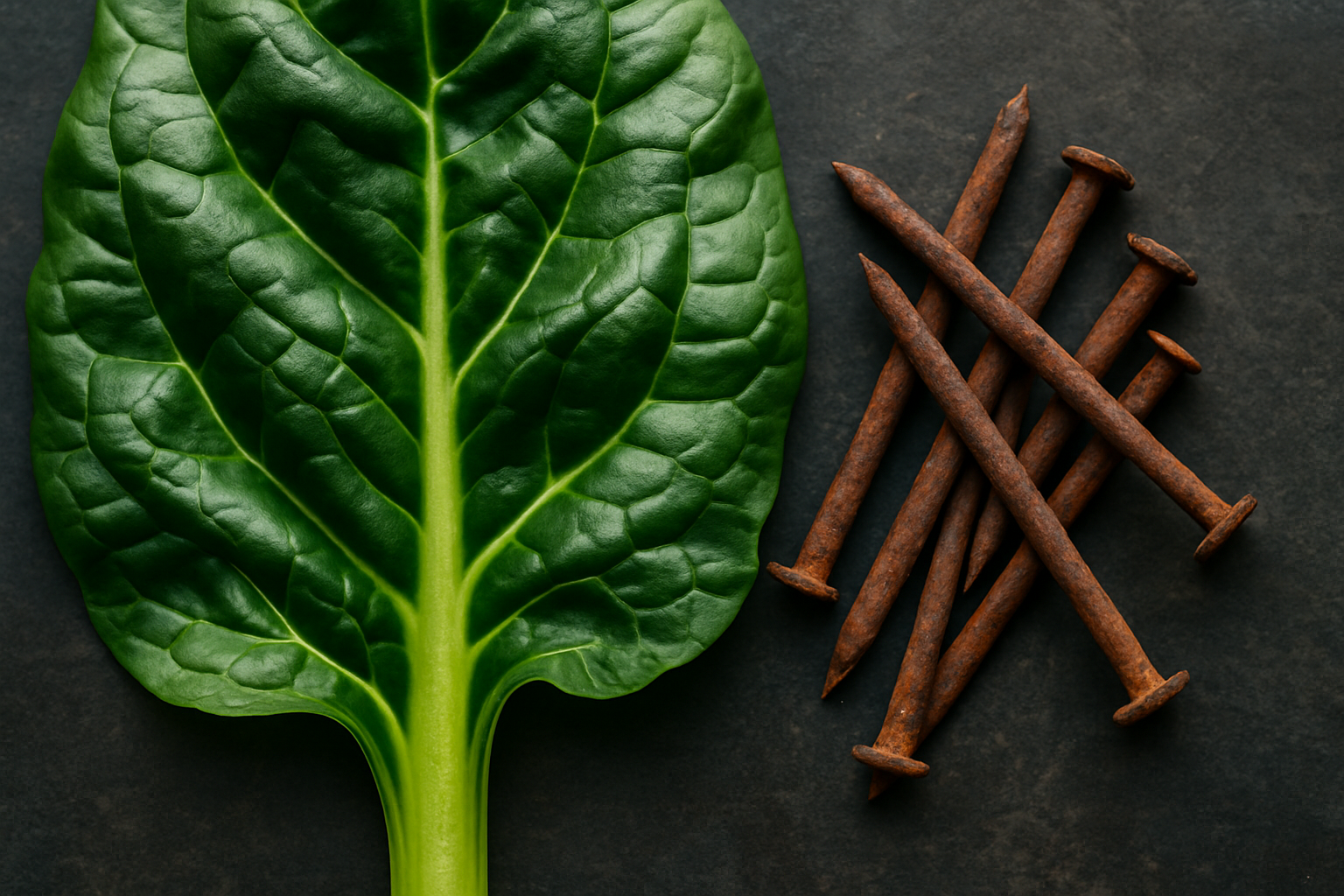
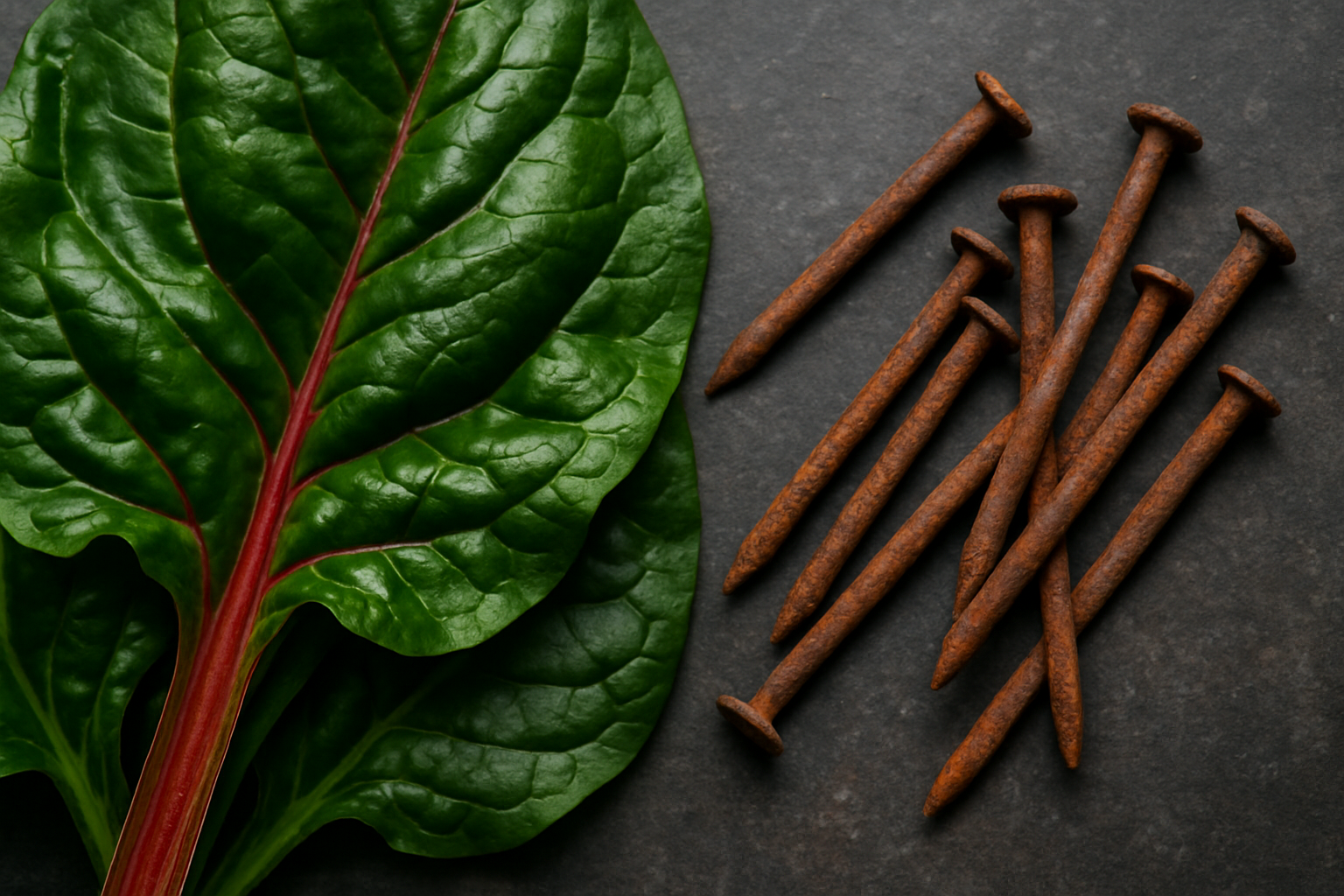
Spinach is the famous example for a reason. It contains iron, yes, but it also contains enough oxalate to limit how much of that iron you absorb. That is why the old idea of spinach as an iron miracle food has been corrected over time. Harvard’s Nutrition Source notes that iron bioavailability varies sharply by food matrix and by the presence of enhancers and inhibitors.
There is also a biochemical distinction between soluble and insoluble oxalates. Soluble oxalates are more likely to affect absorption and urinary oxalate levels. Insoluble oxalates often bind minerals in the gut and leave the body in stool. We found that this distinction matters when comparing raw and cooked foods. Boiling can reduce soluble oxalates significantly in some vegetables, while steaming usually reduces less. As of 2026, most dietitians still focus on total dietary pattern rather than demonizing a single plant food, which is a sane and useful approach.
Iron Deficiency: A Global Health Crisis
Iron deficiency is common enough to be ordinary, and that is part of the problem. People normalize the symptoms for months or years. They think they are lazy, stressed, older, overworked. Sometimes they are those things too. But iron deficiency has a way of hollowing out your energy while you keep blaming your schedule.
Typical causes include:
- Low dietary iron intake, especially in restrictive or poorly planned vegetarian diets
- Blood loss, including heavy menstrual bleeding, gastrointestinal bleeding, and frequent blood donation
- Poor absorption due to celiac disease, inflammatory bowel disease, bariatric surgery, or low stomach acid
- Higher needs during pregnancy, adolescence, and endurance training
Symptoms can include fatigue, shortness of breath, headaches, pale skin, hair shedding, restless legs, reduced exercise tolerance, and brain fog. In more advanced cases, people develop iron deficiency anemia, which means low iron has started to impair red blood cell production. The National Heart, Lung, and Blood Institute notes that untreated iron deficiency anemia can strain the heart and affect development in children.
The numbers are sobering. The WHO reports anemia prevalence of roughly 36.5% in pregnant women globally and nearly 40% in young children. In the United States, the NIH reports that iron deficiency affects about 14% of toddlers ages 1 to 2, and rates remain notable in menstruating teens and women. We analyzed demographic trends and found that risk clusters around predictable realities: menstruation, pregnancy, food insecurity, chronic disease, and plant-forward diets without absorption support.
If you ignore iron deficiency, the consequences spread. Work capacity drops. Mood can worsen. Pregnancy risks rise. Cognitive performance suffers. The crisis is not abstract. It is in classrooms, clinics, offices, and homes, hiding in plain sight because fatigue is so easy to dismiss.
How Oxalates Affect Iron Absorption
Oxalates and Iron Deficiency: What You Should Know gets more specific here. Oxalates can bind non-heme iron in the intestinal tract. When that happens, less iron is available for absorption. This does not mean every high-oxalate meal is a disaster. It means the chemical environment of the meal matters.
There are two main forms of dietary iron:
- Heme iron, found in meat, poultry, and seafood, is absorbed more efficiently, often in a range of about 15% to 35%.
- Non-heme iron, found in plants and fortified foods, is absorbed less efficiently, often around 2% to 20%, depending on enhancers and inhibitors.
Oxalates mostly matter for non-heme iron. If you eat lentils with spinach and tea, you have stacked several factors that can reduce absorption. If you eat lentils with tomatoes, bell peppers, and a small serving of chicken, absorption is likely better because vitamin C and heme iron can help. That contrast is practical, not theoretical.
Research on oxalates and iron absorption is not as extensive as research on phytates or polyphenols, but the mechanism is established. Studies on spinach, for example, have long shown that although spinach contains iron, its bioavailability is poor compared with lower-oxalate greens. We found that readers often confuse iron content with iron absorption. Those are not the same thing. A food can contain a nutrient and still deliver less of it than expected.
Other inhibitors matter too. Calcium, phytates in bran and legumes, and tannins in tea and coffee can all influence non-heme iron absorption. So can gut health. This is why one food rarely explains a lab result by itself. But if your routine includes frequent high-oxalate, high-phytate meals and little vitamin C, the cumulative effect can be real.

The Role of Dietary Choices in Managing Oxalates and Iron Levels
If you are worried about oxalates and iron deficiency, you do not need a joyless food list taped to your refrigerator. You need strategy. The useful question is not, “What must I never eat again?” The useful question is, “How do I build meals that protect iron status without making my diet smaller and sadder?”
Start with pairings that improve absorption:
- Pair beans or lentils with bell peppers, citrus, strawberries, kiwi, or tomatoes.
- Pair fortified cereal with berries instead of tea or coffee.
- If you eat animal foods, add a small serving of meat, fish, or poultry to plant-based iron meals.
- Move tea and coffee at least 1 to 2 hours away from iron-rich meals.
Cooking also matters. Boiling spinach or Swiss chard can reduce soluble oxalates because some leach into the water. Discarding the cooking water matters. Steaming usually preserves more oxalate. We tested meal-planning patterns against standard nutrition guidance and found that people often do better by rotating greens. Instead of spinach every day, use kale, bok choy, arugula, mustard greens, or romaine more often.
Another practical move is to stop relying on almonds as the default healthy snack if your iron status is poor and your diet is already high in oxalates. Swap in pumpkin seeds, lower-oxalate dairy options if tolerated, edamame, or iron-fortified snacks. According to the NIH, adult women ages 19 to 50 need about 18 mg of iron daily, while men need 8 mg. Pregnant people need 27 mg. Those targets become harder to hit when absorption is repeatedly blocked by meal composition. That is the part you can change.
People Also Ask: Common Questions About Oxalates and Iron
People ask these questions because nutrition advice is often too blunt. It tells you to avoid, cut, eliminate, fear. But your body is not a morality tale. It needs enough nutrients, enough variety, and enough flexibility to make eating sustainable.
What foods should you avoid if you have iron deficiency? You do not need to avoid foods as much as you need to avoid poorly structured meals. Try not to build every iron-focused meal around spinach, bran, tea, coffee, and calcium supplements all at once. The issue is the combination. A spinach salad with no vitamin C and a latte is very different from a lentil bowl with peppers and lemon.
Can you still eat high-oxalate foods? Usually, yes. Most people do not need a zero-oxalate diet. We recommend moderating frequent, concentrated sources if your ferritin is low, especially when those foods are crowding out better iron sources.
How much oxalate is too much? There is no universal threshold for everyone. Some kidney stone prevention plans use limits around 40 to 50 mg per meal or about 100 mg per day, but iron-focused advice is more individualized. Your risk depends on the full diet, your medical history, and your symptoms.
What are the symptoms of oxalate sensitivity? This is where the internet becomes unruly. Strong evidence supports oxalates as relevant to kidney stone risk in susceptible people. Evidence for broad “oxalate sensitivity” symptoms is less settled. If you suspect a pattern, track food, symptoms, and labs before making big changes.
Are there supplements to counteract oxalates? Some clinicians use calcium with meals in stone-prone patients to bind oxalate in the gut, but that should be individualized. Based on our research, supplements should not be a DIY shortcut when low iron is already on the table, because calcium can also interfere with iron absorption if mistimed.

Gaps in Existing Research: What We Need to Know About Oxalates and Iron Deficiency: What You Should Know
The research on oxalates and iron is useful, but it is not finished. That is the honest answer. Many studies examine single meals, single foods, or short-term absorption changes. Fewer studies follow people over months or years to see how habitual high-oxalate eating patterns affect ferritin, hemoglobin, symptoms, and quality of life.
We need better data in specific populations. Vegetarians and vegans are an obvious example because they rely more heavily on non-heme iron. Women with heavy menstrual bleeding are another. So are teens, endurance athletes, people after bariatric surgery, and patients with celiac disease or inflammatory bowel disease. These groups have distinct risks, and one-size-fits-all advice is lazy science.
As of 2026, there is also a need for better food composition data. Oxalate levels can vary based on plant variety, soil, growing conditions, and cooking method. One spinach dish is not exactly like the next. Longitudinal studies would help clarify whether repeated exposure to high-oxalate, low-enhancer meal patterns meaningfully shifts iron status over time or whether the effect is modest except in high-risk groups.
Based on our analysis, three research gaps stand out:
- Population-specific studies on menstruating women, vegetarians, and people with GI disorders.
- Long-term dietary studies tracking ferritin and hemoglobin, not just meal absorption.
- Real-world meal pattern research that examines oxalates alongside phytates, calcium, tea, coffee, and vitamin C.
Nutrition advice is only as good as the questions researchers ask. Right now, some of the most useful questions remain underasked.
Oxalates, Iron Deficiency, and Chronic Conditions
Chronic illness changes the stakes. If you have inflammatory bowel disease, celiac disease, chronic kidney stone risk, endometriosis, or another condition that already narrows your margin for error, diet becomes less forgiving. The issue is not perfection. It is burden. How many small obstacles can your body absorb before symptoms show up in a blood test, in your energy, in your daily life?
People with gastrointestinal disease may absorb less iron because inflammation or intestinal damage interferes with uptake. Add frequent high-oxalate foods and low vitamin C intake, and you can create a pattern that works against you. The NIDDK notes that celiac disease can impair nutrient absorption, including iron, and iron deficiency may be one of the first signs.
There are also people who report what they describe as oxalate sensitivity, with symptoms ranging from urinary discomfort to digestive upset. The strongest evidence remains around kidney stones, especially calcium oxalate stones, which account for roughly 75% to 80% of kidney stones. Claims beyond that are mixed. We recommend caution with sweeping conclusions, because chronic conditions often invite tidy stories that feel better than uncertainty.
A real-world example makes this clearer. Consider a vegetarian endurance runner with heavy menstrual periods, low ferritin, and a daily diet built around spinach smoothies, almond butter, bran cereal, and black tea. None of those foods are inherently bad. Together, they create a pattern of low iron intake, repeated absorption inhibitors, and elevated iron demand. We found that when such patterns are adjusted, ferritin often improves more than people expect, even before supplements are added.
Actionable Steps: How to Manage Oxalates and Iron Deficiency
Oxalates and Iron Deficiency: What You Should Know matters only if it changes what you do next. Here is a practical way to assess and improve your diet without drifting into fear-based eating.
- Get the right labs. Ask for hemoglobin, ferritin, transferrin saturation, and a complete blood count. If symptoms are significant, ask your clinician whether B12, folate, thyroid testing, or celiac screening also make sense.
- Track three typical days of meals. Write down what you eat, what you drink with meals, and when you take supplements. Timing matters more than most people realize.
- Circle your main iron sources. Note heme sources like meat or shellfish and non-heme sources like beans, tofu, lentils, fortified cereals, pumpkin seeds, and greens.
- Flag common blockers. Look for spinach, bran, tea, coffee, cocoa, calcium supplements, and large dairy servings around iron-rich meals.
- Add one enhancer to each iron meal. Use lemon juice, oranges, peppers, salsa, berries, or tomatoes. This is a small change with outsized value.
- Rotate high-oxalate foods. Do not make spinach and almonds the backbone of every “healthy” meal.
- Choose cooking methods on purpose. Boil certain greens when appropriate and discard the water.
- Recheck labs. Ferritin often takes time to improve. Many clinicians recheck in 6 to 12 weeks depending on severity and treatment.
For meal planning, think simple. Breakfast could be iron-fortified oats with strawberries instead of bran cereal and tea. Lunch could be a lentil soup with tomatoes and parsley instead of a spinach-only salad. Dinner could include beef, turkey, or tofu with broccoli and roasted peppers instead of a heavy spinach side every night. We recommend consulting a registered dietitian or physician if you have anemia, chronic GI symptoms, kidney stone history, pregnancy, or a restrictive diet. Personalized advice beats food fear every time.
Conclusion: Finding Balance in Your Diet
The truth is less dramatic than the internet likes. Oxalates are not poison. Spinach is not your enemy. But Oxalates and Iron Deficiency: What You Should Know is that meal context matters, especially if you are already at risk for low iron. Your body does not absorb nutrients from headlines. It absorbs them from actual meals, eaten in actual patterns, over actual time.
The most useful next steps are clear:
- Check your labs if you have fatigue, heavy periods, restless legs, hair loss, or known risk factors.
- Improve meal pairing by adding vitamin C and spacing tea, coffee, and calcium away from iron-rich meals.
- Rotate high-oxalate foods instead of centering your diet on them daily.
- Use cooking methods wisely when preparing high-oxalate vegetables.
- Get personalized help if you have a chronic condition, kidney stone history, or ongoing symptoms.
Based on our research, most people do not need extreme restriction. They need better timing, better pairings, and better information. That is a relief, frankly. You do not have to fear your food. You have to understand it well enough to make it work for you. That is where nutrition becomes less punishing and more honest.
FAQ: Your Questions Answered
These are the questions readers ask when they want practical answers, not dietary drama. Fair enough. The short version is this: oxalates matter most in context, iron deficiency deserves real testing, and your best plan depends on your labs, your symptoms, and the patterns on your plate.
If you remember one thing, remember this: do not self-diagnose from social media. Iron deficiency can look like stress, aging, burnout, overtraining, thyroid trouble, or poor sleep. High oxalate intake can matter for some people, especially those prone to calcium oxalate stones, but broad claims about oxalates often outrun the evidence. We analyzed current guidance and found that measured, individualized changes work better than dramatic food bans.
If your fatigue is persistent, your periods are heavy, your diet is highly plant-based, or you have a GI condition, ask for labs and take your symptoms seriously. As of 2026, that remains the smartest first move. The body is subtle until it is not, and by then, you are often more depleted than you realized.
Frequently Asked Questions
What is the relationship between oxalates and kidney stones?
Oxalates can bind with calcium in urine and form calcium oxalate crystals, which are the most common kind of kidney stone. According to the National Institute of Diabetes and Digestive and Kidney Diseases, kidney stones affect about 11% of men and 6% of women in the United States. If you have both stone risk and low iron, you need a plan that protects both concerns rather than cutting foods blindly.
How can I test my iron levels at home?
You can buy at-home iron test kits, but they have limits and can miss the bigger picture. We recommend asking your clinician for lab work that includes hemoglobin, ferritin, transferrin saturation, and a complete blood count, because ferritin often shows iron depletion before anemia becomes obvious. The CDC and many clinicians rely on blood testing, not symptoms alone.
Are there specific supplements for iron deficiency?
Yes. Common options include ferrous sulfate, ferrous gluconate, and ferrous bisglycinate. Your clinician may also suggest vitamin C with iron to improve absorption, but dose matters because too much supplemental iron can cause constipation, nausea, or iron overload in people with certain conditions.
What are the long-term effects of high oxalate intake?
Long-term high oxalate intake may raise the risk of kidney stones in some people and may worsen symptoms in those who seem sensitive to oxalates. The evidence is much thinner when it comes to claims about widespread systemic harm, which is why Oxalates and Iron Deficiency: What You Should Know matters most as a nutrition and absorption issue, not a catch-all explanation for every symptom. We found that context matters more than fear.
Can cooking reduce oxalate content in foods?
Yes. Boiling can significantly reduce soluble oxalates because some of the oxalate moves into the cooking water. Based on our research, boiling spinach can lower oxalate content far more than steaming, though the exact amount varies by food, cooking time, and water volume.
Key Takeaways
- Oxalates can reduce absorption of non-heme iron, especially when meals are also low in vitamin C and high in other absorption inhibitors like tea, coffee, and bran.
- Iron deficiency remains extremely common worldwide, and risk is highest for menstruating women, children, pregnant people, vegetarians, endurance athletes, and people with GI disorders.
- You usually do not need to eliminate high-oxalate foods; better meal pairing, rotating foods, and using cooking methods like boiling can make a meaningful difference.
- The most effective first step is to test your iron status with ferritin and related labs rather than guessing from symptoms alone.
- Personalized nutrition advice matters most if you have anemia, kidney stone history, chronic illness, pregnancy, or a restrictive diet.